Studio Elements
Water. Metal. Glass. Stone.
 Quick delivery (office hours)
₹26,668 (incl. GST)
Quick Delivery (office hours)

Software is not returnable.
Even if you’re unfamiliar with these instruments by name, you’ve likely heard their otherworldly tones in film scores and sound design projects – sometimes taking center stage, other times lurking ominously or even threatening in the background. The Studio Elements collection brings together water (waterphones), metal (singing bowls, steel rails, tam-tams), stone (lithophones), and glass (glass harmonica, verrophone, bottles), offering everything from mellow, ethereal drones to signals of impending danger in suspenseful movie scenes. This rare and unusual collection is incredibly versatile, perfect for adding unique textures to any production.
Overview
- Rare and unique instruments
- Archaic sounds, from ethereal shimmers to thunderous strikes
- Perfect out-of-the-box sound
- Expertly crafted mixer presets
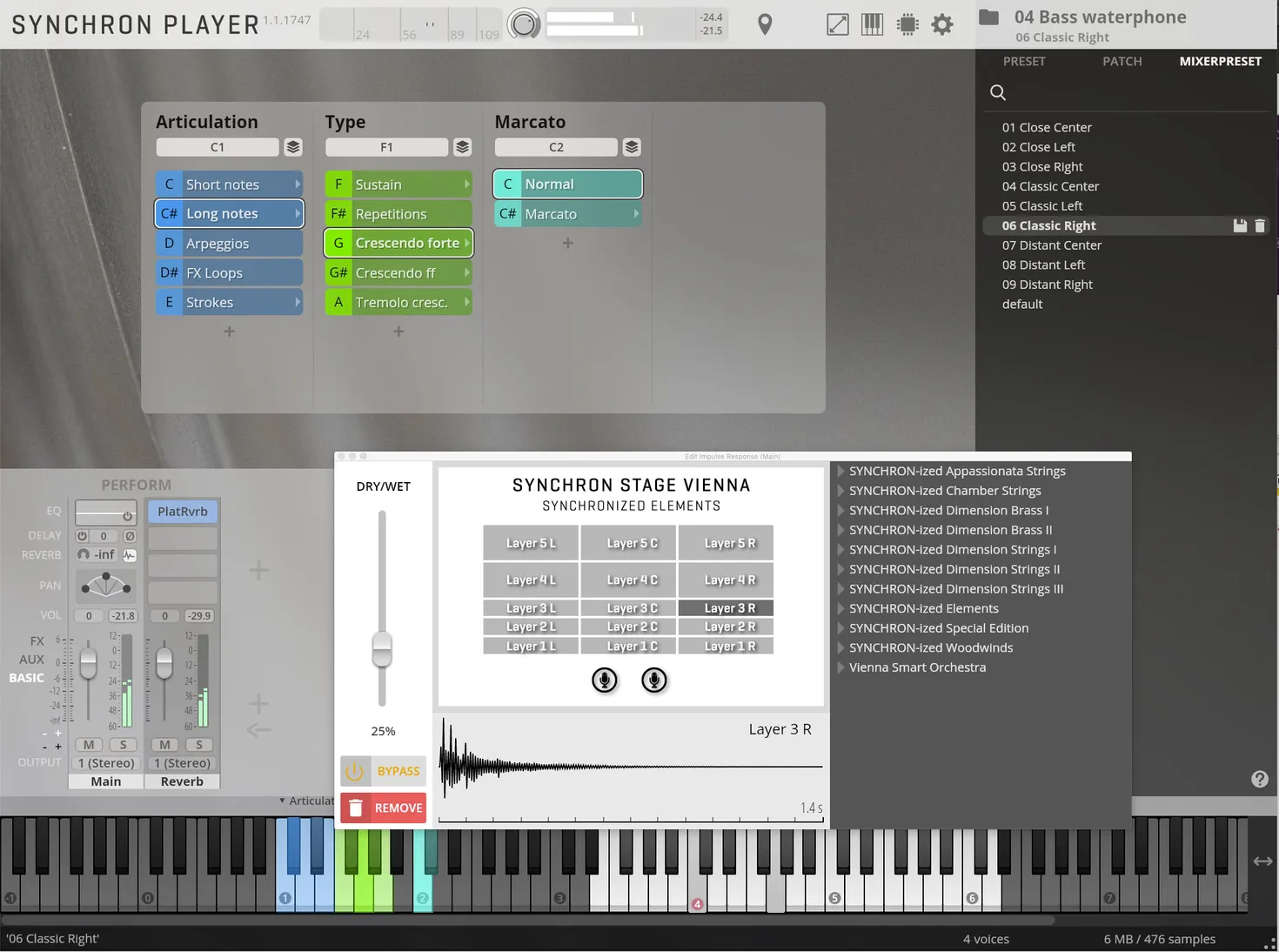
- Easily place each instrument at different positions in the main hall of Synchron Stage Vienna
The Sound of Metal and Water
These totally unique instruments have long been a trade secret for composers and sound designers, capturing their imagination with unusual archaic sounds that range from the ethereal to the thunderous. As strange as these instruments are they are also wildly versatile, precisely because there are no real rules or preconceived notions of how to use them. They’re easily blendable with more traditional orchestrations and with a dazzling array of VSL custom created effects presets the already wildly imaginative tones of these instruments have been significantly expanded.
Elementary Sound Sources
The Waterphone was invented by Richard Waters in 1967, inspired by the African kalimba, the nail violin and the Tibetan water drum. The instrument consists of a closed water-filled body of stainless steel or bronze and a hollow-cylindrical neck. Metal rods of different lengths are attached vertically around the neck and are usually scraped with a bow. The sound can be modified by pivoting the water-filled body. Like the triangle and the piccolo, the Waterphone’s high-frequency sound can be heard even when the entire orchestra is playing.
The Bass Waterphone is a particularly large model with a diameter of 35 cm (13 ¾ “).
The glass harmonica was widely popular during Mozart’s time. Hemispherical glass bowls rotate around a horizontal axis driven by a pedal. By putting wet fingers on the bowls as they turn they excite the glass into lovely ethereal tones.
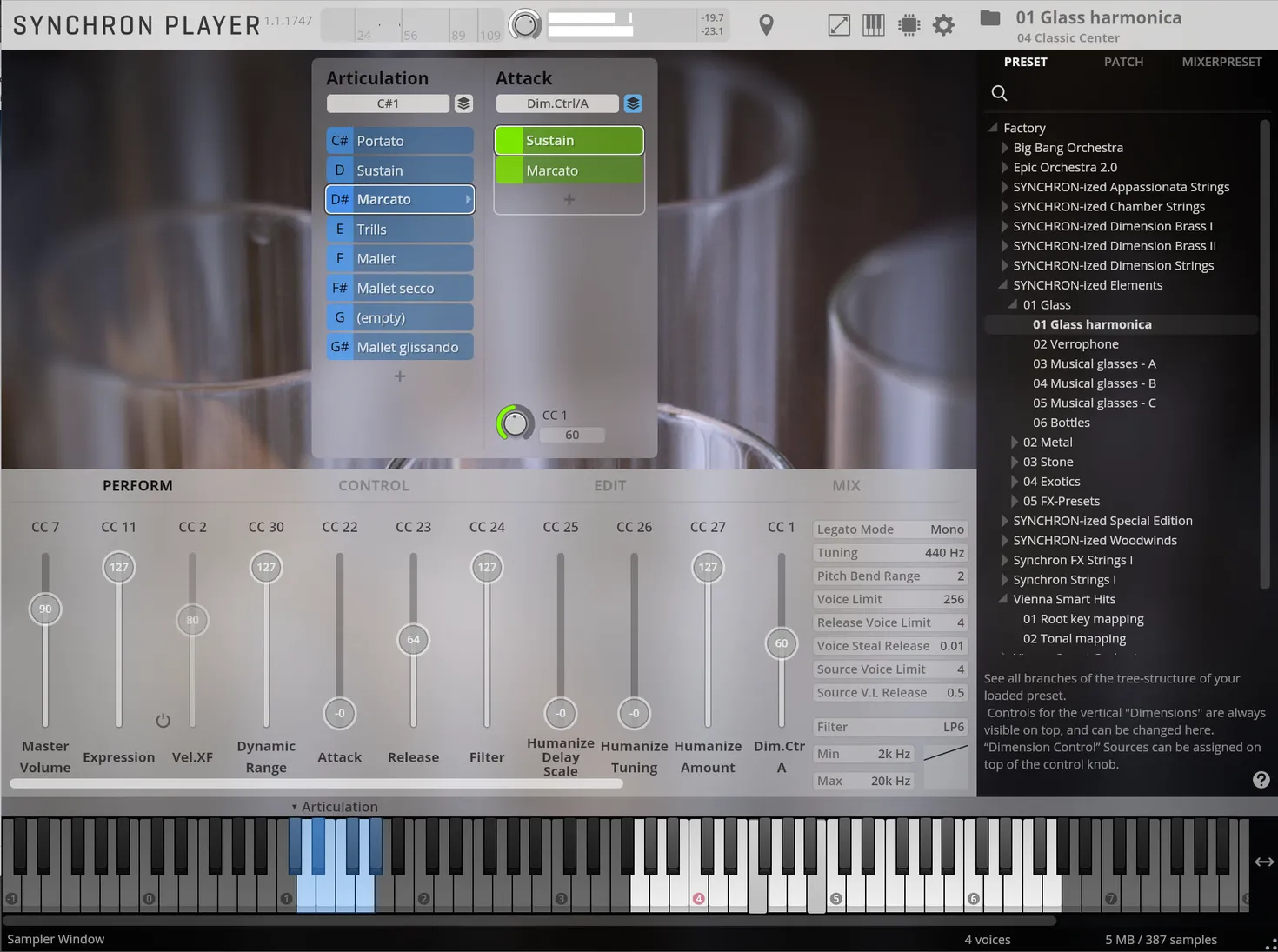
The verrophone consists of chromatic glass tubes arranged vertically like the resonator tubes of mallet instruments. The glass tubes are rubbed with moistened fingers to create its unique sound. The musical glasses are filled with varying amounts of water and rubbed with moistened fingers, too, but their sound is much more delicate and shimmering compared to the verrophone. The glass instruments are rounded out by bottles that are blown with different techniques, including flutter tongue.
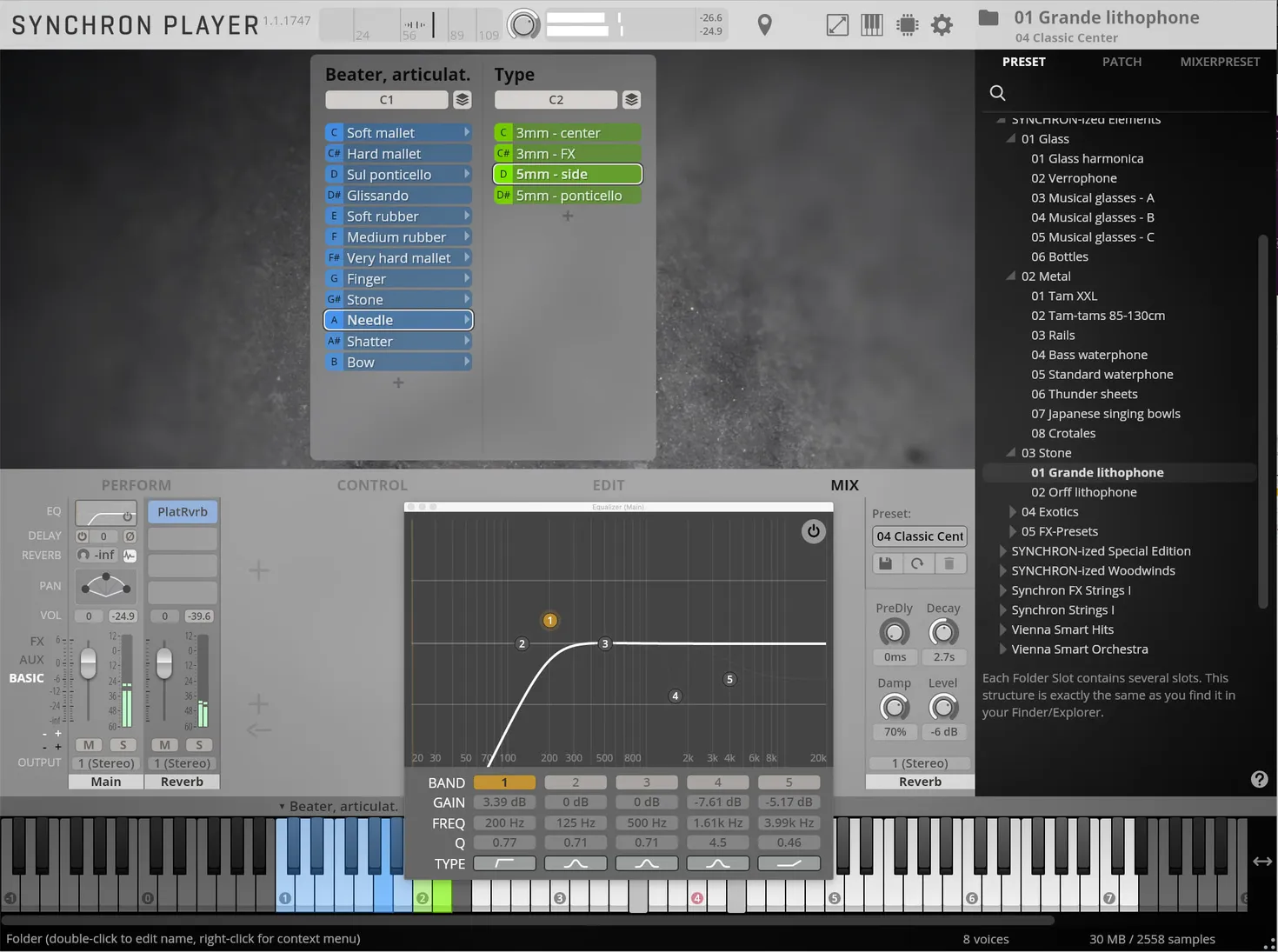
The sounding stone bars of the lithophone are made of basalt, granite, marble and other minerals. Lithophones were first introduced to the orchestra by Carl Orff (1895 – 1982) in his Greek drama “Antigone”. The Grand Lithophone is a unique instrument that looks like a marimba and has a tonal range of almost five octaves. Due to the resonance tubes, the tonal possibilities range from extremely soft, full and dark tones to a hard and bright timbre.
The metal category includes steel rails struck with a steel hammer, thunder sheets in various sizes and playing techniques, crotales and a set of Japanese singing bowls. The series of tam-tams includes instruments with different diameters, ranging from 85 cm to the 200 cm XXL tam-tam. The latter was struck with metal rods, cardboard and jigsaw blades, hit and rubbed with chains, and manhandled with fly swatters, an egg cutter, and even a massaging rod.
The collection is rounded off by a series of exotic percussion instruments such as ocean drums, spring drums, cuícas, waldteufel as well as bull roarer and lion’s roar.
Water Music, FX and more
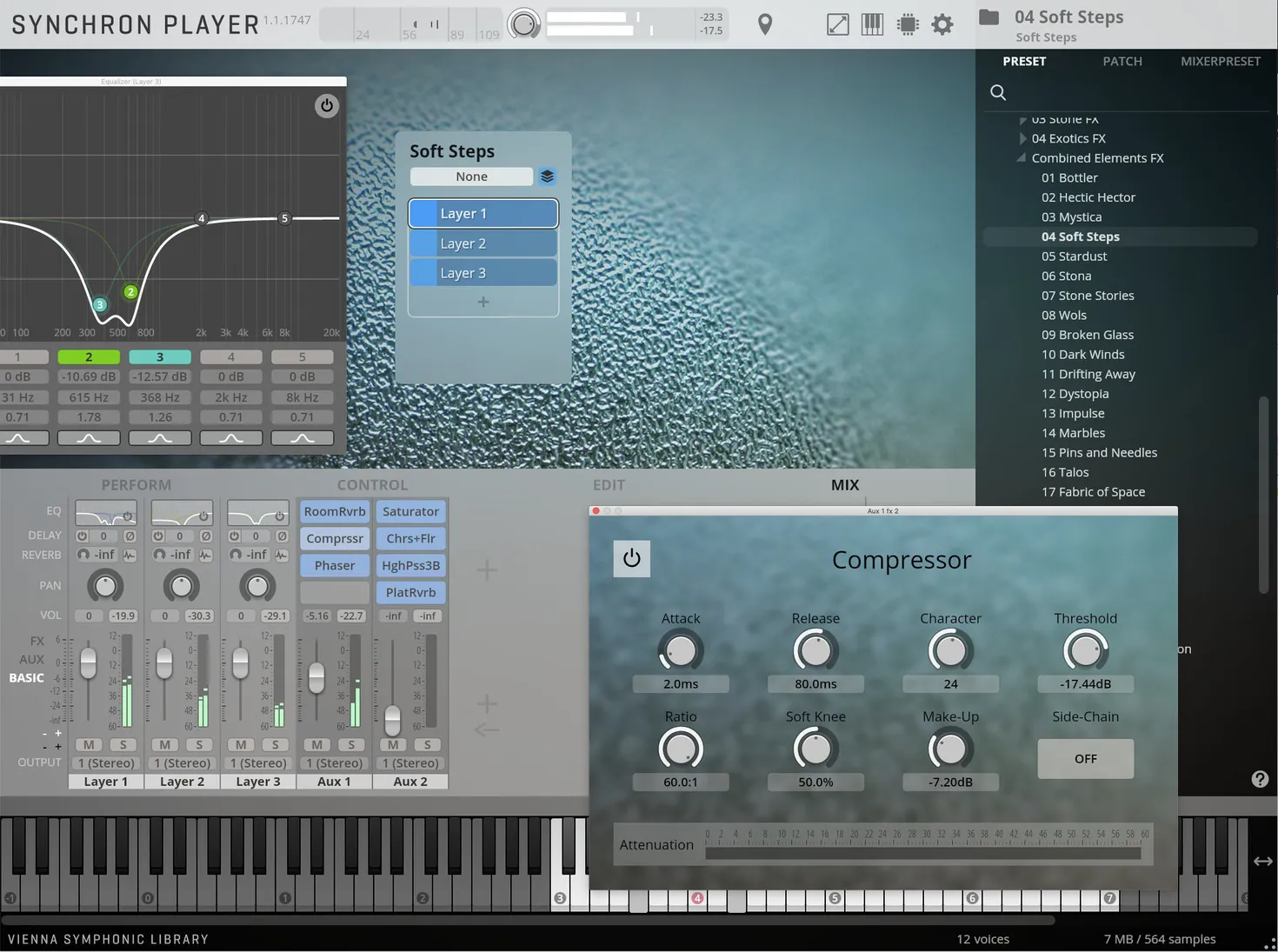
In addition to the “classic” presets, the Elements Collection also offers a wide variety of “FX Presets” created by our experienced sound experts and engineers. Notably, the “Combined FX” category with a total of 24 newly-created instruments made by combining different Elements is a treasure-trove of fresh and organic sounds and effects for adventurous composers and sound-designers.
NKS Integration
This Library supports Native Instruments’ NKS format and is compatible with Komplete Kontrol keyboards and Maschine. Use the Light Guide to quickly identify key switches and play ranges of your instruments, browse and preview sounds, and quickly adapt them using pre-configured control knobs.
Related products
-
Hummingbird
The true sound of Gibson 1963Brand ProminyCategory Virtual Instruments₹26,019 (incl. GST)
 Quick delivery (office hours)
World Impact: Global Percussion
The perfect storm of ethnic, world, and cinematic percussionBrand Vir2Category Virtual Instruments₹11,067 (incl. GST)
 Instant Delivery
VI One
The complete workstation virtual instrumentBrand Vir2Category Virtual Instruments₹11,067 (incl. GST)
Instant Delivery